

We all know how embedded finance works a little too well.
Every time you book a ride home, or order a coffee while leaving for your office you end up making a payment without even switching an app, embedded finance enables that.
The fastest way to lose a ready buyer is to make them work. Baymard’s research shows shoppers abandon purchases when checkout feels too long or complicated, and embedded finance is designed to remove that friction.
When the payment step is “later” it becomes “never”. We see (and experience) this a hundred times. Adding cognitive load at the moment a user is ready to act is always a bad idea.
Embedded finance exists to remove that friction. It turns financial actions into a natural part of the product flow, instead of a detour.
Embedded finance is the integration of financial services (like payments, lending, insurance, or banking features) directly inside a non-financial app or platform, so users can complete financial actions without leaving the experience.
It is reshaping how financial services are delivered, with the global market projected to reach $588.49B by 2030.
For CFOs and financial leaders, understanding this shift from standalone financial products to integrated experiences is critical for competitive positioning.
When Uber processes payments seamlessly or Amazon offers instant credit at checkout, they’re leveraging embedded finance to reduce friction and capture more value from customer interactions.
What Embedded Finance Looks Like in Real Life
We all have used embedded finance even if we didn’t know how to define it. We thought it was just the smooth user experience, what we didn’t realize is that the platform “hosts” the experience, while regulated financial partners and infrastructure providers power it behind the scenes.
Common Embedded Finance Products (With Examples)
- Embedded payments
You pay inside the app, and the platform handles the payment flow end-to-end.
Examples: ride-hailing apps that charge automatically after the ride, food delivery apps, subscription apps. - Buy Now, Pay Later (BNPL) as embedded credit
At checkout, you see installment options instantly, often with minimal extra steps.
Examples: BNPL options on ecommerce checkouts. - Embedded lending
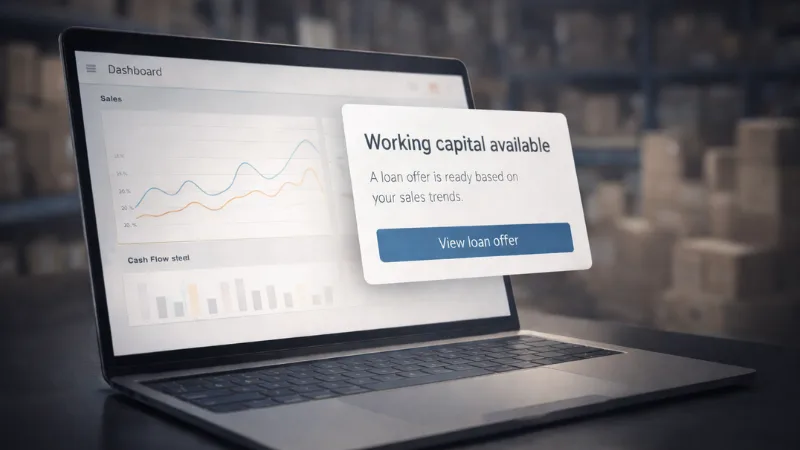
Loans appear inside a platform when the platform has enough context to underwrite risk quickly.
Examples: platforms offering working capital to sellers based on sales data and cashflow trends. - Embedded insurance
Insurance is offered right when it becomes relevant, not as a separate shopping journey.
Examples: trip insurance during flight booking, device protection during electronics checkout. - Embedded banking (accounts, cards, wallets)
Platforms offer card products, stored value, or account-like features that keep users in the ecosystem.
Examples: branded cards and wallets tied to a platform’s rewards and spend loops.
How Embedded Finance Works
There are usually three layers:
- The end brand (the app you use)
This is the platform that owns the user journey. It controls the UX, placement, and timing of the offer. - The embedded finance enabler (often “BaaS” style providers)
They provide APIs, program management tooling, onboarding flows, ledger management, card issuing rails, risk tooling, and integrations. - The regulated institution (bank, insurer, licensed lender, payments entity)
They provide licensing, compliance frameworks, and access to core rails (card networks, ACH equivalents, settlement systems). The platform typically does not “become a bank” in the legal sense.
Why Embedded Finance Took Off
Two structural shifts made it inevitable:
- Digital payments became normal behavior
In developing economies, the share of adults making or receiving digital payments rose from 35% (2014) to 57% (2021). Once people trust digital money movement, they expect everything else (credit, insurance, payouts) to be equally seamless. - Finance has always been “embedded,” just not always digital
Auto loans at dealerships, store credit cards, and installment plans existed long before apps. Embedded finance is the same idea, moved into software and scaled via APIs.
Benefits of Embedded Finance
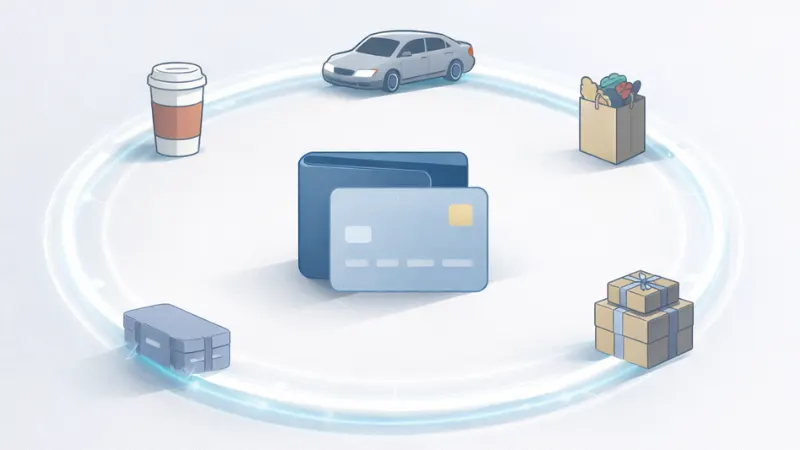
For customers, embedded finance keeps things moving. You’re already buying, booking, or subscribing, and it simply folds the money step into that same moment. Fewer taps, fewer forms, and a faster yes. When it works, you barely notice. When it’s missing, the detour is obvious.
For businesses (platforms and brands), the goal is to stop leaking intent at the finish line. Baymard reports 18% of US shoppers have abandoned an order because checkout felt too long or complicated, and embedded finance removes that “leave the journey to go pay” drop off. Cornell research also found that after adopting one click checkout, customers increased spending by an average of 28.5%.
More revenue streams come next. Once you own the “money moment,” you can layer interchange, referral fees, revenue share, and premium financial features, but don’t kid yourself, these only work if the core experience is trusted and invisible. If it feels like a cash grab, users punish you.
Retention improves for a simple reason, if your platform becomes the place where money moves, you become harder to replace. Switching costs rise because you’re no longer just a marketplace or app, you’re part of someone’s financial routine.
For banks and fintech infrastructure providers, embedded finance is distribution without fighting for attention. Instead of trying to win the consumer’s home screen, they power many ecosystems and get reach through partners. The tradeoff is that the platform owns the customer relationship, not the bank.
Embedded Finance vs Open Banking vs BaaS
People confuse embedded finance, open banking, and Banking as a Service (BaaS) because they sit in the same stack.
- Embedded finance is the what: a financial action inside a non-financial journey (pay, borrow, insure, invest).
- Open banking is the permission and data layer: user-consented access to bank data and, in some places, payment initiation. It can enable embedded finance, but it isn’t embedded finance by itself.
- BaaS is often the how: the operating model and API partnerships that let non-banks ship financial products faster. Many embedded finance products ride on BaaS-style rails, but not all.
Market Size and Why the Numbers Don’t Match
On market size, keep your ego out of it.
The numbers swing because firms define the category differently, so treat sizing as directional. Grand View Research, for example, estimates the embedded finance market at about $83.32B in 2023 and projects about $588.49B by 2030 (32.8% CAGR from 2024 to 2030). Another widely cited view (Dealroom and ABN AMRO Ventures, cited by the World Economic Forum) frames it much larger, around $7.2T by 2030, likely using a broader definition.
Challenges and Risks of Embedded Finance
Regulatory and compliance spillover
Even if the platform is not a bank, the user experience is still financial. Misleading disclosures, weak KYC/AML handling, or sloppy complaint resolution can become a brand crisis fast.
Fraud and chargebacks
Embedded flows can be attacked because they are high volume and designed to be low friction. You need risk controls that do not destroy UX.
Operational dependency
If your partner’s APIs go down, your checkout goes down. Embedded finance makes finance part of your core product reliability problem.
Unit economics illusions
A lot of teams overestimate revenue share and underestimate customer support, disputes, and compliance overhead. Embedded finance is not “free margin.”
However, platforms that properly model these costs upfront and build robust operational frameworks often achieve sustainable unit economics within 12-18 months.
Practical Examples You Can Use in a Business Conversation
Dealership loans are embedded lending before apps. The financing is offered at the moment of purchase, inside the seller’s environment, because that is when intent is highest.
Modern platforms replicate this with software: offer credit at checkout, payouts inside a gig app, insurance inside a booking funnel. Same psychology, better plumbing.
Conclusion: The Real Point
Embedded finance is not “banks disappearing.” It is finance changing its packaging and distribution. The winners will treat financial services as a product and user experience layer, not a back-office add-on, while still respecting the hard constraints: risk, compliance, resilience, and trust.
If you only copy the visible tactic, like slapping BNPL onto checkout, you get a temporary conversion bump and a new set of problems: credit losses, chargebacks, regulatory exposure, customer support load, and fragile vendor dependency. If you build the underlying capability deliberately, finance stops being a gimmick and becomes part of your moat. You own the workflow, the data loops, the underwriting and pricing feedback, and the reliability that customers silently reward.
Organizations that get this balance right will compound advantage in three ways. First, lower customer acquisition costs because finance is embedded inside an already high-frequency journey, so distribution is native rather than paid. Second, higher transaction volumes because you remove friction and expand purchasing power at the point of intent. Third, deeper customer relationships because financial features create switching costs and habit formation, especially when they improve outcomes, not just convenience.
The key test: are you merely renting a feature, or are you building a system. Renting gives lift. Systems create defensibility.
Frequently Asked Questions (FAQs):
- What is embedded finance in simple terms?
It is when an app or platform lets you pay, borrow, or get insurance inside the same experience, without sending you to a separate bank or insurer. - Is embedded finance the same as fintech?
No. Fintech is a broad category of financial technology companies. Embedded finance is a distribution model where financial services appear inside non-financial products. - Is BNPL embedded finance?
Yes. BNPL is a common form of embedded credit because it is offered directly at checkout. - Do companies need a banking license to offer embedded finance?
Usually no. Most platforms partner with regulated institutions and use API providers so the licensed entity provides the regulated service, while the platform provides the user experience. - Why do customers like embedded finance?
It removes steps and decisions. People can complete a purchase, split payments, or add coverage right when it is relevant. - What industries benefit most from embedded finance?
Any business with frequent transactions or high-intent moments: ecommerce, marketplaces, mobility, travel, B2B SaaS, and platforms that manage payouts.