
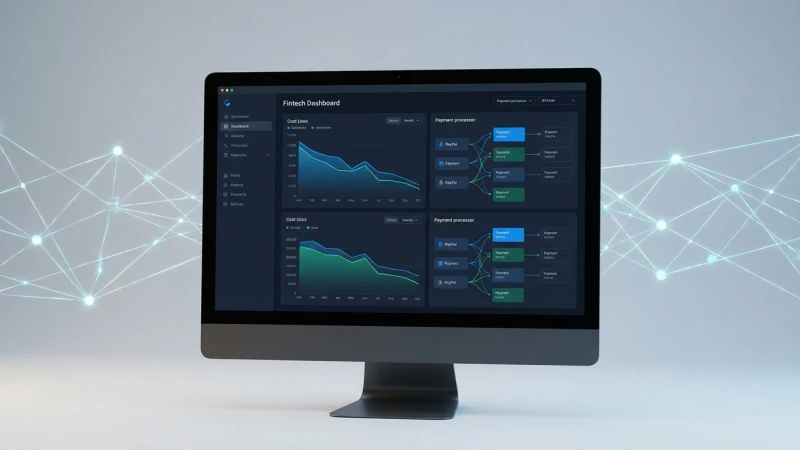
B2B companies using payment orchestration report an impressive 23% reduction in processing costs and 40% fewer failed payments. Imagine those kinds of savings reflected in your quarterly reports. This complete guide will show you how to achieve similar results within 90 days. You’ll get an ROI calculator to justify investment, learn modern routing strategies, and walk away with a practical implementation roadmap.
Payment Orchestration ROI Calculator: Quantify Your Cost Savings Potential
Let’s talk about the numbers. The best approach to grasping the benefits of payment orchestration is to calculate your potential cost savings. On average, companies see a 15-30% reduction in processing fees alone. This isn’t just theory; it’s quantified by processing fee improve metrics and failed payment recovery rates that are key advantages of implementing a strong orchestration strategy. Imagine slashing your operational costs with a few strategic adjustments.
| Metric | Current Cost (%) | Post-Orchestration Cost (%) | Potential Savings (%) |
| Processing Fees | 2.9% | 2.0% | 31% |
| Failed Payment Rate | 5% | 3% | 40% |
| Operational Costs | 5% | 3.5% | 30% |
Plug your own numbers into this framework to see your personalized potential savings. For instance, if your company processes $10M annually, cutting 0.9% on processing fees means saving $90,000 a year. That’s not just ROI; that’s change your bottom line.
How Payment Orchestration Works: The Complete Architecture Breakdown
Ever wondered what sits between your multiple gateways and processors? Payment orchestration acts as a sophisticated layer architecture, centralizing and automating the routing of payments. At its core, you’re looking at a real-time routing decision engine capable of dynamically switching between different payment routes based on predefined rules.
This layer provides failover with retry mechanisms to ensure zero downtime. It abstracts APIs, reducing the complexity of integrating and managing multiple payment processors. You’ll find that this architecture is important for fluid scalability and reliability.
Intelligent Payment Routing Strategies: 7 Rules That Cut Costs
Ready to improve your payment flow? Intelligent routing isn’t just beneficial, it’s necessary. Here are seven strategies that can cut costs:
1. Geographic Routing: Redirect transactions through local processors to benefit from lower interchange fees.
2. Success Rate improve: Automatically select processors with the highest success rates for specific transaction types.
3. Currency-Based Routing: Route transactions through processors that handle currency conversion without additional fees.
4. Peak Time Load Balancing: Distribute transactions during peak times to avoid extra charges.
5. Processor-Specific Advantages: use processors that offer volume-based discounts.
| Routing Strategy | Cost (%) | Success Rate (%) |
| Geographic | 1.5% | 98% |
| Currency-Based | 1.8% | 97% |
| Peak Time Load Balance | 2.0% | 95% |
Adopting these strategies means you’re not just cutting costs, but actively improving your payment process efficiency.
Payment Gateway Comparison: When to Route Where for Maximum Savings
Choosing the right gateway isn’t just preference; it’s strategic. Understand each gateway’s cost structure, processing speed, and success rates by region. For instance, a gateway might have a lower fee in Europe but higher in Asia. Savvy routing could save you significant amounts on each transaction.
Read between the lines of hidden fees like chargeback costs and currency conversion rates. Your decision matrix should reflect these nuances.
B2B Payment Orchestration Implementation: 90-Day Rollout Plan
Here’s how you implement payment orchestration efficiently:
Weeks 1-3: Technical integration begins. Align your IT and finance teams on goals and timelines. Set up the framework for your routing rules.
Weeks 4-6: Run simulations and start small with a few accounts. Acquire feedback and make adjustments.
Weeks 7-9: Full-scale testing. Validate performance metrics and document unexpected issues.
Weeks 10-12: Launch and monitor. Implement a monitoring system to track KPIs and address any anomalies quickly. Now, you’re ready to reap the rewards of reduced costs and improved efficiency.
Consolidation & Reporting: Unified Payment Analytics That Drive Decisions
With a many of payment channels, consolidating data is your secret weapon. Use cross-gateway reconciliation automation and real-time dashboards to provide a unified view of payment performance.
Establish KPIs that matter: cost per transaction, processing time, and success rates. Automate compliance reporting to reduce manual work and boost accuracy.
This simplify reporting will fundamentally change how you diagnose and react to your financial data, giving you a competitive edge.
Order-to-Cash improve: How Payment Orchestration Accelerates B2B Cash Flow
By improving your payment process, you’re directly impacting your cash flow. Accounts receivable are settled faster, and payment methods become improve for buyer preferences. Should you route through credit cards or ACH for specific clients? Orchestrate payments to minimize fees and maximize satisfaction.
Handling international payments gets a facelift. Adjust routing based on currency and region to ensure maximum efficiency. This isn’t just financial housekeeping, it’s strategic cash flow improve.
Conclusion: Take Action with Payment Orchestration
Want to see those savings and efficiency boosts in your financial reports? Start with the ROI calculator and map your strategy today. For an even deeper dive into our payment insights, head over to our homepage. In the next year, payment orchestration isn’t just a competitive advantage, it’s the new standard for B2B payment processing.
What is payment orchestration? Payment orchestration is a solution that integrates and improve multiple payment gateways and processors, centralizing control over payment routing. It increases transaction success rates and reduces costs by dynamically adapting to the best available payment routes. How does payment orchestration reduce costs? By intelligently routing payments through the most cost-effective channels, payment orchestration minimizes transaction fees and improve success rates. It reduces failed payment costs and use geographic and currency-based routing to improve every transaction. How long does payment orchestration implementation take? Typically, a strong implementation can be completed in 90 days. This includes integration, testing, and full deployment phases where systems are aligned, simulations run, and performance monitored. What’s the difference between payment orchestration and a payment gateway? A payment gateway help transactions by communicating between the merchant and payment processor. In contrast, payment orchestration manages multiple gateways and processors, improve routing and reducing costs across all payments.